Shopping cart
0
Add to unlock complimentary delivery.
✓ Complimentary delivery unlocked
Complimentary card
Pre-delivery photo preview
 Online support from 8:00 to 21:00
Order your flowers online or via WhatsApp 💐🌷🌹
Flower delivery in Bucharest and Ilfov
🌹 #1 Online Florist in Bucharest
Online support from 8:00 to 21:00
Order your flowers online or via WhatsApp 💐🌷🌹
Flower delivery in Bucharest and Ilfov
🌹 #1 Online Florist in Bucharest
Online support from 8:00 to 21:00
Order your flowers online or via WhatsApp 💐🌷🌹
Flower delivery in Bucharest and Ilfov
🌹 #1 Online Florist in Bucharest
Online support from 8:00 to 21:00
Order your flowers online or via WhatsApp 💐🌷🌹
Flower delivery in Bucharest and Ilfov
🌹 #1 Online Florist in Bucharest
Online support from 8:00 to 21:00
Order your flowers online or via WhatsApp 💐🌷🌹
Flower delivery in Bucharest and Ilfov
🌹 #1 Online Florist in Bucharest
Online support from 8:00 to 21:00
Order your flowers online or via WhatsApp 💐🌷🌹
Flower delivery in Bucharest and Ilfov
🌹 #1 Online Florist in Bucharest
Online support from 8:00 to 21:00
Order your flowers online or via WhatsApp 💐🌷🌹
Flower delivery in Bucharest and Ilfov
🌹 #1 Online Florist in Bucharest
Online support from 8:00 to 21:00
Order your flowers online or via WhatsApp 💐🌷🌹
Flower delivery in Bucharest and Ilfov
🌹 #1 Online Florist in Bucharest
Online support from 8:00 to 21:00
Order your flowers online or via WhatsApp 💐🌷🌹
Flower delivery in Bucharest and Ilfov
🌹 #1 Online Florist in Bucharest
Online support from 8:00 to 21:00
Order your flowers online or via WhatsApp 💐🌷🌹
Flower delivery in Bucharest and Ilfov
🌹 #1 Online Florist in Bucharest
Online support from 8:00 to 21:00
Order your flowers online or via WhatsApp 💐🌷🌹
Flower delivery in Bucharest and Ilfov
🌹 #1 Online Florist in Bucharest
Online support from 8:00 to 21:00
Order your flowers online or via WhatsApp 💐🌷🌹
Flower delivery in Bucharest and Ilfov
🌹 #1 Online Florist in Bucharest
Online support from 8:00 to 21:00
Order your flowers online or via WhatsApp 💐🌷🌹
Flower delivery in Bucharest and Ilfov
🌹 #1 Online Florist in Bucharest
Online support from 8:00 to 21:00
Order your flowers online or via WhatsApp 💐🌷🌹
Flower delivery in Bucharest and Ilfov
🌹 #1 Online Florist in Bucharest
Online support from 8:00 to 21:00
Order your flowers online or via WhatsApp 💐🌷🌹
Flower delivery in Bucharest and Ilfov
🌹 #1 Online Florist in Bucharest
Online support from 8:00 to 21:00
Order your flowers online or via WhatsApp 💐🌷🌹
Flower delivery in Bucharest and Ilfov
🌹 #1 Online Florist in Bucharest
Online support from 8:00 to 21:00
Order your flowers online or via WhatsApp 💐🌷🌹
Flower delivery in Bucharest and Ilfov
🌹 #1 Online Florist in Bucharest
Online support from 8:00 to 21:00
Order your flowers online or via WhatsApp 💐🌷🌹
Flower delivery in Bucharest and Ilfov
🌹 #1 Online Florist in Bucharest
Online support from 8:00 to 21:00
Order your flowers online or via WhatsApp 💐🌷🌹
Flower delivery in Bucharest and Ilfov
🌹 #1 Online Florist in Bucharest
Online support from 8:00 to 21:00
Order your flowers online or via WhatsApp 💐🌷🌹
Flower delivery in Bucharest and Ilfov
🌹 #1 Online Florist in Bucharest

Eustoma and lisianthus are the same flower — here’s why it has two names, what colors are available, what it can be mistaken for, how long it lasts in a vase, and how to care for it so it lasts two weeks.

Eustoma is one of the most popular flowers in modern bouquets — and, at the same time, one of the flowers few people recognize by name. You see it in almost any mixed bouquet from a good florist; it resembles a peony, rose, or poppy in turn, and lasts in a vase longer than almost any other cut flower. In this guide, we explain what eustoma is, why it has two names, how long it lasts, and how to care for it.
Eustoma (Eustoma grandiflorum) is a plant in the Gentianaceae family — the same family as gentian. It grows wild in the warm prairies of the southern United States, Mexico, and northern South America, which is also where some of its common names come from: prairie rose or Texas bluebell.
The flower has delicate, slightly ruffled petals arranged in overlapping layers. There are both single varieties, with 5–6 petals, and dense double varieties that look strikingly like a miniature peony. The stem usually bears several flowers and buds on the same stem — which is why a single eustoma stem “fills out” much more than it appears to.
This is the number-one confusion, and the answer is simple: eustoma and lisianthus are exactly the same flower. The difference is purely historical — the plant was initially classified in the genus Lisianthus, then moved to the genus Eustoma. However, the old name remained in use in the flower trade worldwide. You may also come across the spelling liziantus, a phonetic adaptation in Romanian.
So, if you searched for “lisianthus in Romanian”: the answer is eustoma. And vice versa.
Three mix-ups occur constantly in floristry:
The palette is surprisingly broad, and the shades are natural — not dyed:
This is its main advantage. Eustoma lasts an average of 10–14 days in a vase, and in good conditions it can last up to two and a half weeks. For comparison, a cut rose lasts 7–10 days, while a peony lasts 5–7 days.
The reason is the structure of the stem: open flowers and buds at different stages grow on the same stem. As the open flowers wilt, the buds open one by one — the bouquet “renews” itself for several days in a row.
In the language of flowers, eustoma means gratitude, sincere appreciation, and a lasting bond. It does not carry the direct romantic connotations of a red rose, making it suitable for situations when you want to say “thank you,” “I’m glad you exist,” or “I respect you” — to colleagues, parents, friends, and teachers.
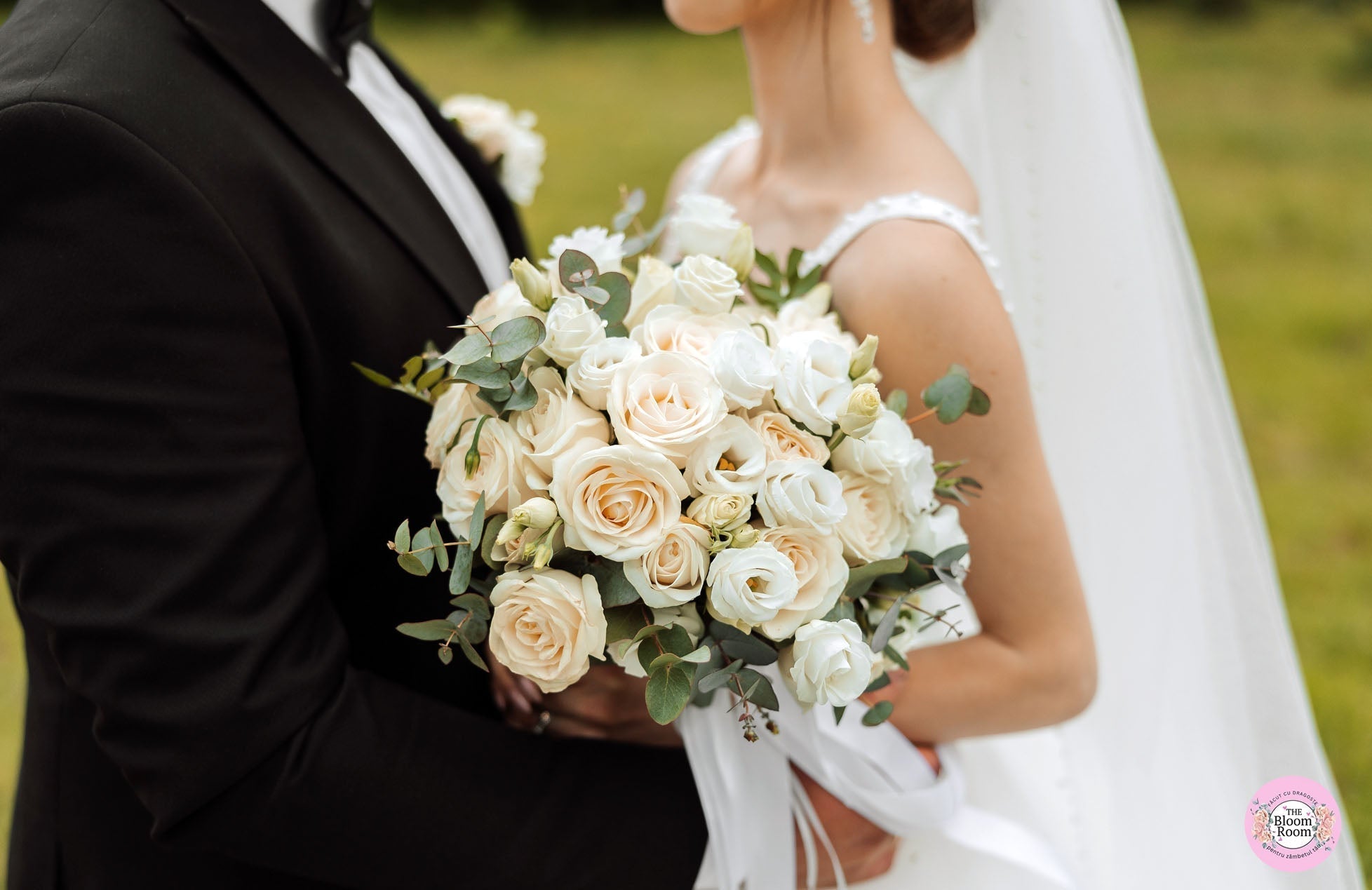
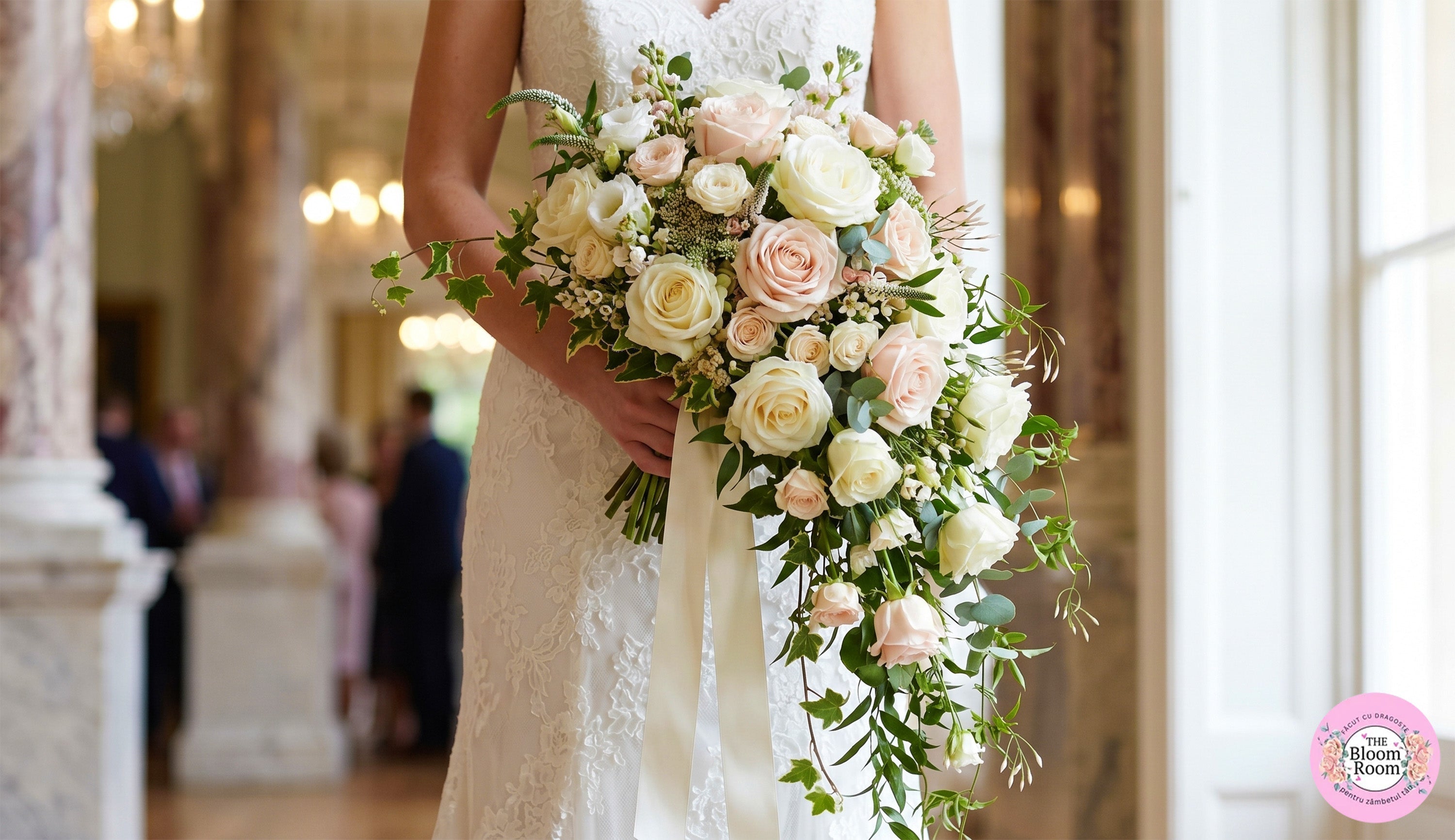
White eustoma is associated with purity and new beginnings, which is why it is a constant presence in bridal bouquets and christening arrangements.
Yes. It is exactly the same plant. Lisianthus is the former name of the genus, while Eustoma is the current one. Both names are used in the international flower trade.
On average, 10–14 days, and with water changed every two days, it can last more than two weeks. It is one of the most long-lasting cut flowers.
Not really. Its fragrance is very subtle or absent, making it suitable for hospitals, offices, and people sensitive to strong scents.
Usually because of a crushed stem cut or water that is too cold. Recut the stem at an angle with a sharp knife and use room-temperature water.
Yes, as an annual plant. It needs direct sunlight and well-drained soil and does not tolerate frost. Plant it after the risk of late frosts has passed, usually after mid-May.
We work with eustoma all year round at our flower shop in Obor, Șoseaua Ștefan cel Mare 234. See all eustoma bouquets or same-day delivery bouquets — orders accepted until 4:00 p.m., with delivery in 1–3 hours in Bucharest and Ilfov.